Expertise and Compassion in Prostate Cancer Treatment
My Values
Prostatology was founded to provide specialised robotic prostate cancer surgery with a focus on outcomes and patient well-being. I combine surgical fluency and expertise with compassionate communication and data-driven decision-making. I value transparency, trust, and patient empowerment throughout the treatment journey.
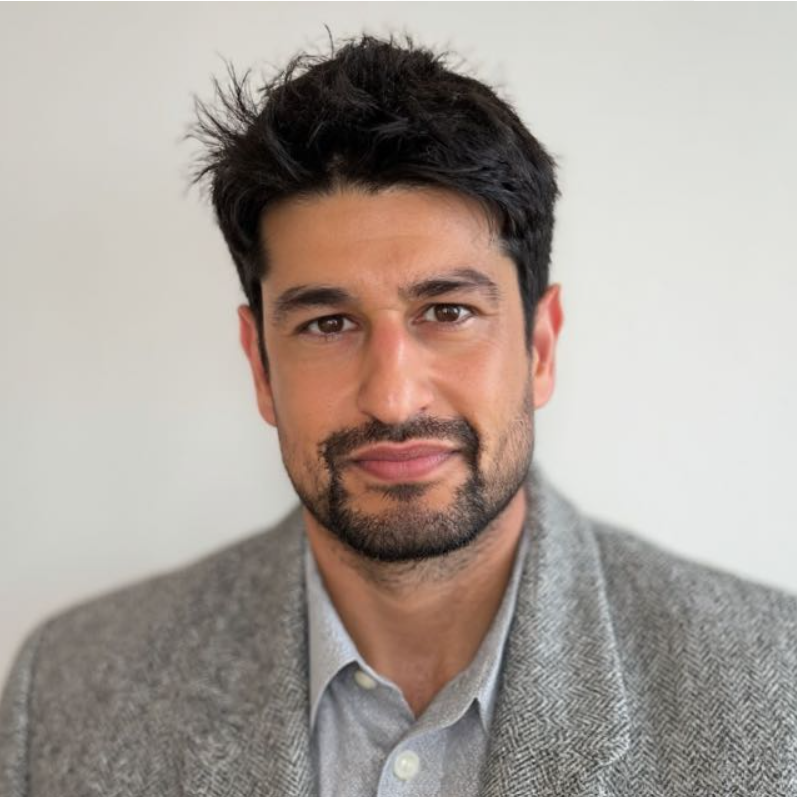
Meet Mr Bates
Mr Anthony Bates brings over a decade of urological expertise and extensive research experience, ensuring the best possible outcomes while supporting quality of life.
Testimonials
All recieved from patients treated by Mr A Bates
Surgical Outcomes
"To hear you say I am cured was overwhelming. You are a top surgeon and a top man. I will be eternally grateful to you and your wonderful team for giving me a new lease of life."
— Prostatectomy patient
"I am thrilled with the outcome. I have done a fair bit of walking, feel good, and have been dry since the catheter was removed."
— Prostatectomy patient
"Being cleared of prostate cancer is a hugely significant moment in my life. The skill, care and expertise behind my surgery are in no way taken for granted."
— Prostatectomy patient
"A year on from my surgery, I feel like I have started a new and different life. I am so glad to be alive."
— Patient, one year after prostatectomy
Consultation and Communication
"Thank you for your professionalism and the outstanding care provided. You took the time to explain my diagnosis and treatment options at the initial consultation."
— Patient
"I cannot say what it means to me that you took an interest in my problem and discussed the procedure with me."
— Patient
Care and Dedication
"You showed great professionalism, care and concern, checking on me very late into the night. You are held in very high regard by the ward staff and the whole urology department."
— Prostatectomy patient
"You have gone more than the extra mile. We hope this shows our immense gratitude."
— Patient and his wife
"We really appreciate the care and kindness shown towards me and my wife during my stay."
— Patient
"We could not thank you and your team enough for the operation and recovery of our uncle."
— Family of a patient
"Thank you for treating my husband. We are very happy to have a doctor like you."
— Wife of a patient
My qualifications
NHS consultant, and NHS/private robotic radical prostatectomy
I am a Consultant Urological Surgeon at University Hospitals of Leicester (GMC 7456289), with a specialist focus on prostate cancer, robotic prostatectomy and robotic pelvic uro-oncology.
My private practice is based at Spire Leicester Hospital and Spire Cambridge Lea Hospital. My main clinical interest is the diagnosis and surgical treatment of prostate cancer, particularly robot-assisted radical prostatectomy, transperineal prostate biopsy, and careful decision-making for men with newly diagnosed or suspected prostate cancer.
I hold a first class BSc (University of Manchester), MBChB (University of Bristol Medicine), MSc (from the University of Oxford), and FRCS Urol and FEBU qualifications. I am a Fellow of the Royal College of Surgeons of England and the European Board of Urology, and I am on the GMC Specialist Register. I completed a post-CCT fellowship in robotic pelvic uro-oncology at Oxford University Hospitals and have also undertaken robotic surgical training at ORSI Academy in Belgium. Earlier in my training, I worked as an invited research fellow at the Global Robotics Institute in Florida with Dr Vipul Patel.
My practice is focused on high-volume prostate cancer surgery. I perform robot-assisted radical prostatectomy, including nerve-sparing and modified Retzius-sparing techniques where appropriate. The aim is always to balance cancer control with recovery of urinary continence and sexual function. I also perform robotic cystectomy, transperineal prostate biopsies, TURP for benign prostate enlargement, TURBT for bladder tumours, and core diagnostic urological procedures.
I take a data-driven and outcomes-focused approach to surgery. I keep a detailed log of operative complexity, cancer clearance, functional recovery and patient outcomes, so that advice can be based on real results rather than vague promises. In prostate cancer surgery, detail matters: the MRI, biopsy findings, anatomy, tumour position, nerve-sparing plan, reconstruction and recovery pathway all need to be considered together.
Alongside my clinical work, I am actively involved in prostate cancer research. My academic interests include robotic prostatectomy, nerve-sparing surgery, prostate MRI, image-guided diagnosis, focal therapy, active surveillance, PSMA-PET imaging, prostate cancer recurrence, continence recovery and the use of better data to guide treatment decisions.
I have authored more than 25 PubMed-indexed publications with over 1,000 citations, with work published in journals including European Urology, BJU International, European Urology Oncology, Journal of Robotic Surgery and Journal of Clinical Urology. My research has included systematic reviews, clinical outcome studies, imaging-led prostate cancer pathways and technical work in robotic prostate surgery.
My published work includes research on focal therapy for localised prostate cancer, active surveillance, salvage robot-assisted radical prostatectomy, artificial urinary sphincter complications after prostate cancer treatment, continence outcomes after robotic prostatectomy, selective nerve-sparing in high-risk prostate cancer, neurovascular bundle-sparing techniques, indocyanine green fluorescence in robotic urology, and PSMA-PET detected recurrence after radical prostatectomy.
I am also involved in prostate cancer service development and patient support. I serve as a Trustee, Consultant Urological Surgeon and PROSTaid Prostate Cancer Centre Lead, supporting work that improves information, counselling and practical help for men and families affected by prostate cancer.
Current and developing projects include work on improving prostate cancer pathways, imaging-led risk assessment, MRI and histology correlation, and data-driven approaches to surgical planning. I am particularly interested in how prostate MRI, pathology, genomics and operative outcomes can be brought together to improve treatment selection and make prostate cancer care more precise.
My approach with patients is straightforward. I explain the diagnosis clearly, discuss all suitable options, and avoid pushing treatment where surveillance or another approach is more appropriate. When surgery is the right option, I aim to plan it carefully, operate meticulously and support recovery properly.
Prostate cancer care should not feel like being pushed through a system. Patients deserve clear information, honest advice and a surgeon who knows the details.
The principle behind Prostatology
Prostate cancer care is full of detail. The MRI, biopsy and PSA history matters. The anatomy is relevant.
The operative detail and the recovery are meaningful.
Underneath the detail lies a simple principle: a man should understand what is happening to him.
He should understand the seriousness of his cancer. He should understand whether treatment is needed. He should understand why surgery is being recommended, or why surveillance may be preferable. He should understand the risks to continence and sexual function. He should understand what recovery looks like after the hospital stay is over.
Good care is not just technical. It is clear.
Prostatology exists to bring that clarity to men facing prostate cancer: careful diagnosis, honest advice, precise treatment and proper follow-up.
Just the facts, explained properly, and a plan built around the patient.